
Friday
The Nasdaq dropped 2.9% on Friday, its worst day since June. Intel fell 29%, its biggest one-day drop in more than forty years, on a weak outlook. Amazon missed on both revenue and earnings and kept its $220 billion capital spending plan anyway. The day before, Alphabet shed roughly half a trillion dollars in market value.
Every headline said the same thing: AI spending fears.
I don’t think it’s a spending fear. I think it’s a demand problem, and I’ve got the invoice to prove it.
My bill went down too
I run a small media company. Seven people, about 140 sites across three states. I spend thousands of dollars a month on AI: a couple of Grok bot accounts, Claude, Perplexity, all running on Macs I haven’t replaced in years. I’m the customer these companies are building data centers for.
Here’s what my bill has done over the last four or five months. It’s gone down. A lot. And the bots are doing a lot more than they used to.
One of my accounts shows me a running percentage of my weekly spend. Certain fixed runs happen every day; that’s the baseline. The discretionary work I pile on top is the variable. I have a good feel for what that work cost a week ago, a month ago, six months ago. The curve points down.
I’m not trying to spend less. I’m just spending less. It isn’t even an effort anymore.
I’m one customer. But I’m exactly the customer this build-out is for, and Google’s own numbers tell the same story at scale.
The lawyer who got too good to bill
The reason is simple, and it’s the part nobody on an earnings call wants to say out loud. The tools got good enough that they don’t need me to walk them through anything. Six months ago a task took a dozen instructions, three corrections and a re-run. Every one of those was tokens. Now the bot asks me what I want, does it, and hands it back in a few seconds. Fewer round trips, less waste, smaller bill.
I always figured AI pricing would collapse from the bottom. People would trade down to older, cheaper models that could do the same job, the way you skip the new cruise line and take the old boat. That’s not what happened to me. I stayed on the newest models, and they got so good they ate their own billable hours.
Think of a lawyer who believes the nicest office wins the clients. He keeps moving up: $100 an hour in the first office, $200 in the next, then $400, then $800. That’s compute. But the job that took him an hour in the first office takes fifteen minutes in the second, and one minute in the fanciest office in town. His rate went up eight times. His time per job went down sixty times. The job that used to bill $100 now bills about $13, and he’s paying rent on the $800 office. Every upgrade makes him better at losing money.
That’s the AI business. The better the product, the less the customer pays. And you can’t fix it by making the product worse, because then I go to the competitor.
The constraint is me
Here’s the part I never saw coming, and I’ve spent a year picking apart the financing side of this business. The limit isn’t the machine. It’s me.
I can’t think up harder questions faster than the machines are getting better at answering the ones I already have. I ask maybe a hundred questions a day. That number hasn’t changed. It didn’t go up because there are now five AI companies with more compute than has ever existed. Somebody just answers my hundred questions quicker and cheaper, and spends more money every day to do it.
Everybody is watching the model race. The only race that grows revenue is the question race, and nobody is running it, because you can’t build a data center for curiosity.
Google is the proof, and it happened this week. Google owned search and made a fortune on it. When AI showed up, the comfort line was that search would still make money, it would just happen in a chat window. On Wednesday Alphabet reported its first combined revenue and profit miss in nearly four years. Search growth slowed to 12%. Free cash flow went negative. Capex guidance stayed put. Cloud revenue doubled and nobody cared, because cloud is AI companies renting compute from each other. It’s the bed of the truck. Search is the load, and the load got lighter. On Thursday the stock fell 12.6%, its worst day since the 2004 IPO, and half a trillion dollars was gone. A person only has so many questions in a day. Five companies now fight over the same hundred, each spending more per answer than Google ever spent on a blue link, and Google has borrowed more than $100 billion since the start of last year to stay in that fight. That’s not disruption. That’s a knife fight over the same plate.
It’s true of my own company. I didn’t invent anything. Local news existed long before I got here. I built a system that does the job a newsroom does, across 100-plus sites, for a fraction of what my competitors spend on one or two. AI built that for me. Now it’s built. What’s left is maintenance, and the tools get cheaper at maintenance every month. There’s no second newspaper behind the first one to harvest. You can only clear the same forty acres once.
The bills land as the customers leave
Now put that against the capex. Most of the data centers inside Amazon’s $220 billion, and Google’s, and Meta’s, aren’t on yet. They’re dirt and steel. The power bills, the depreciation and the debt service land in 2027 and 2028. Their cost curve is back-loaded.
My demand curve is front-loaded. I hit the ceiling this fall, and I didn’t decide to. So the moment their bills peak is the moment their best customers go flat. Not because we’re unhappy. Because we’re done. You can’t win back a customer who got what he came for.
Every dollar of that capex adds debt and capacity to a system that doesn’t need more capacity. At the end you have more debt to service, more capacity to carry, and customers who need less of it, not more.
The best picture I know is a Petri dish. The bacteria eats, leaves waste, and eventually the waste outweighs the food and the whole colony dies at once. Not from bad intent. It ran out of room. The economy is the dish, and nothing about the dish changed. AI is a fatter bacteria that eats faster, and it leaves waste faster too. The only thing that changes the outcome is a bigger dish: a new product, a new process, something that pumps the waste out and pumps the food in. Nobody has shown me one. The capex is buying a fatter bacteria, not a bigger dish.
Bounded
Infinite context windows won’t save it either. Say the models get big enough to hold everything at once and you never have to ask again. You can do that exactly one time. Whatever fits in the window is all that’s in the window. The finite input is still the ceiling.
Strip everything else away and one word covers it: bounded. The tools are brilliant at bounded jobs. The language they learned from is bounded. The dish is bounded. And the man asking the questions is the most bounded thing in the building.
Every other piece of the AI argument has a counter. The financing is fine. The chips aren’t a commodity. The models will keep improving. Argue those all you want. Nobody can argue the customer will think faster than the machine answers, because the machine’s whole purpose is to make sure he doesn’t have to.
The market figured out on Friday that something was wrong with the spending. It hasn’t figured out what yet. It’s not that the product doesn’t work. It’s that it finished. The one piece of the puzzle AI can’t solve is the guy asking the question, and he already ran out.
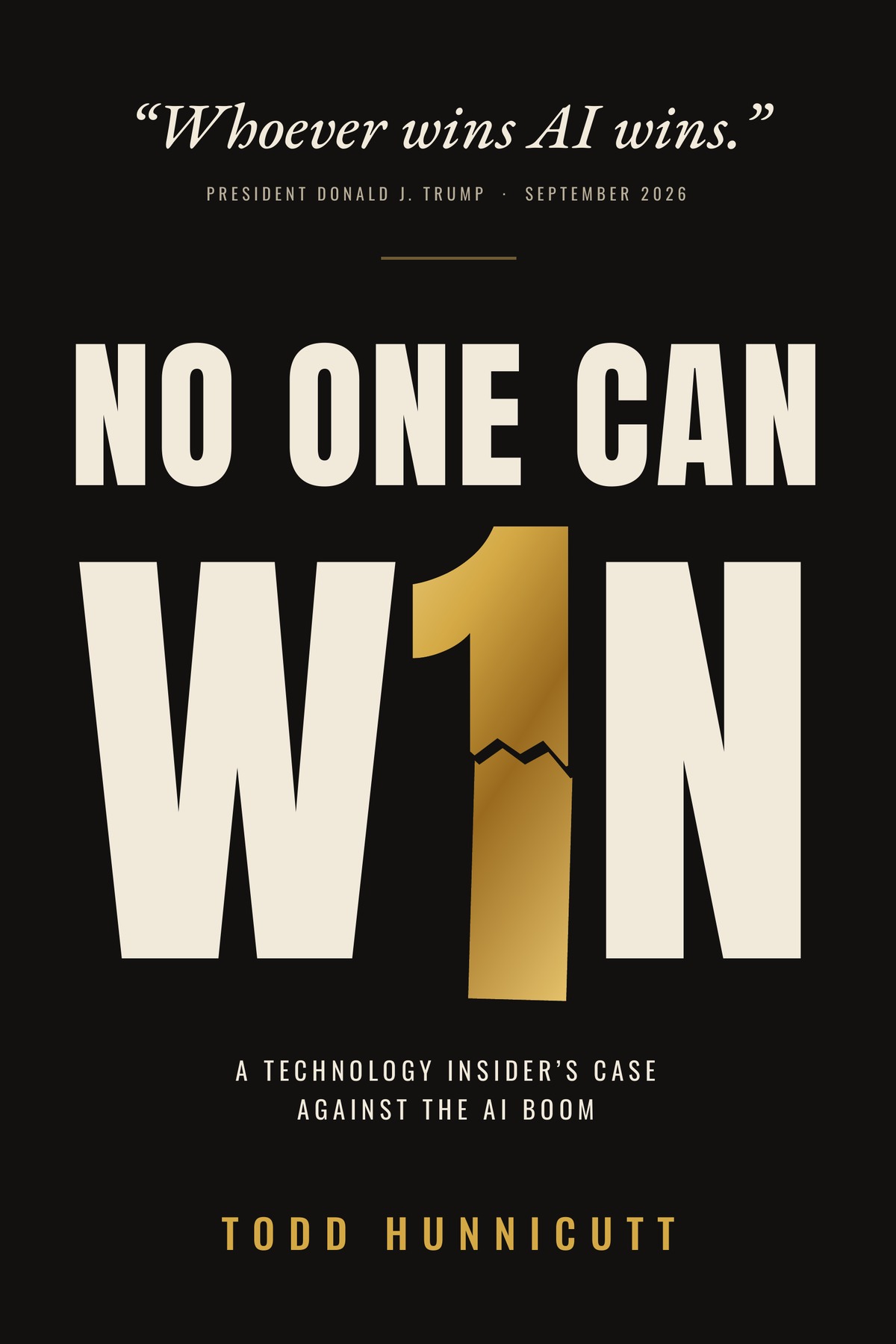
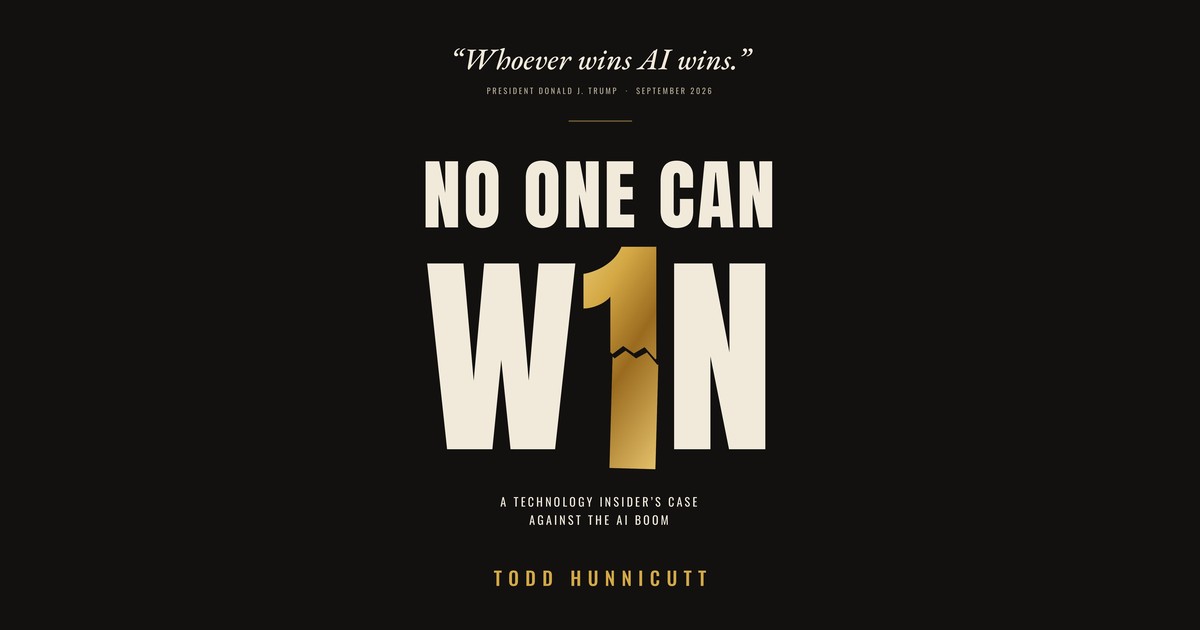
Todd Hunnicutt is CEO of Real Internet Sales (Development Partner for the HERE NETWORK), and the author of the forthcoming book No One Can Win.
Disclosure: The author may hold long or short positions in securities of companies mentioned in this piece, and those positions may change at any time. This column is opinion, based on the author’s own business experience and publicly reported results. It is not investment advice.