
On Thursday the Nasdaq fell as much as 5.7% and dropped into correction territory, more than 10% below the record it set just last month. The Dow gave back its entire post-election rally. Nvidia, the company at the center of the AI build-out, fell as much as 9%, and for part of the morning it had wiped out its entire gain for 2026.
You’ll hear plenty of explanations: the election, interest rates, a soft forecast here and there. They’re all true, and they all miss the point. On Thursday the market started asking the one question the AI trade can’t afford: what if the spending stops?
The earnings are the spending
Some analysts are already calling Nvidia a bargain on forward earnings. But look at where those earnings come from. They are the capital budgets of a handful of customers, flowing through one supplier, and a meaningful slice comes back from Nvidia’s own investments in those same customers. Calling it cheap assumes the spending never slows.
There’s an old rule for cyclical stocks: they look cheapest at the top, because earnings peak right before they fall. Steel did it. Memory chips did it. Homebuilders did it in 2006.
The cash machines aren’t a cushion
The standard answer is that the giants can afford it. Maybe. This year Alphabet’s free cash flow went negative for the first time since its 2004 IPO: minus $5.9 billion in the second quarter, then minus $9.1 billion in the third, as quarterly capital spending hit $51.3 billion. It has gone back to the debt markets three times in nine months. And on the very day the market cracked, Apple, the cleanest balance sheet in tech, lined up a $7 billion bond sale.
Then there’s the part nobody wants to say out loud. The AI they’re borrowing to build is the same AI that undermines the businesses paying for it. Search, social media and software: the intellectual property that made the money is now easier than ever to copy.
Lose the asset, keep the debt
That’s the real asymmetry. If this build-out goes the way overbuilds always go, some of these data centers will end up in bankruptcy court, and someone will buy them for pennies on the dollar. That buyer gets almost all the use of the asset and none of the debt. He can sell a comparable product at a lower price. Meanwhile the original builder still has to earn what it used to, and pay back the loans out of that.
It’s already written into the paperwork. CoreWeave’s own announcement of a new $2.6 billion loan notes that it matures in about five years, while its customer contracts average three. The debt outlives the revenue. On Wednesday, CoreWeave’s 2031 bonds traded as low as 79.5 cents on the dollar. And of roughly $80 billion in data-center bonds sold this year, about $37 billion is junk, up from $8.6 billion last year.
The election was a test
On Tuesday, voters weighed in directly. Of 41 local data-center measures on the ballot, voters sided against the data centers in all but one. If construction slows now, we get a clean experiment. Either the compute shortage is real and things start breaking, or nothing breaks and we learn we never needed all those buildings.
Either way, the story takes damage. If the shortage wasn’t real, neither was the story, and the people who told it lose the credibility they’ll need the next time they ask us to believe something. That includes Washington, which tied a good part of its economic plan to this bet.
Why it matters to everyone
This isn’t just a tech story anymore. A large share of the stock market’s value, and the wealth effect behind a lot of consumer spending, now rests on AI. Nothing else waiting in line has a story that big. That’s why nobody can get off the ride, and why it gets more dangerous the longer everyone stays on.
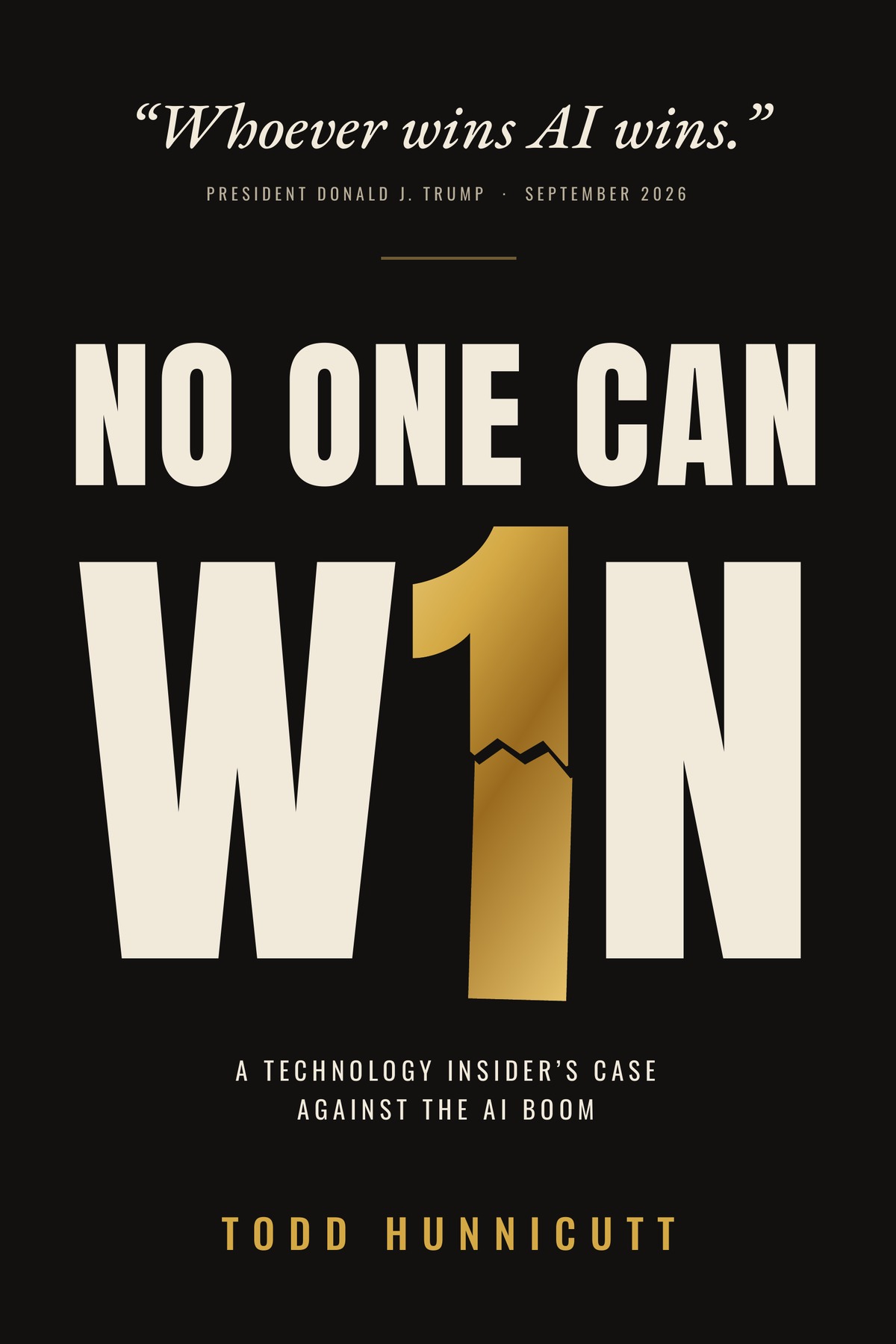
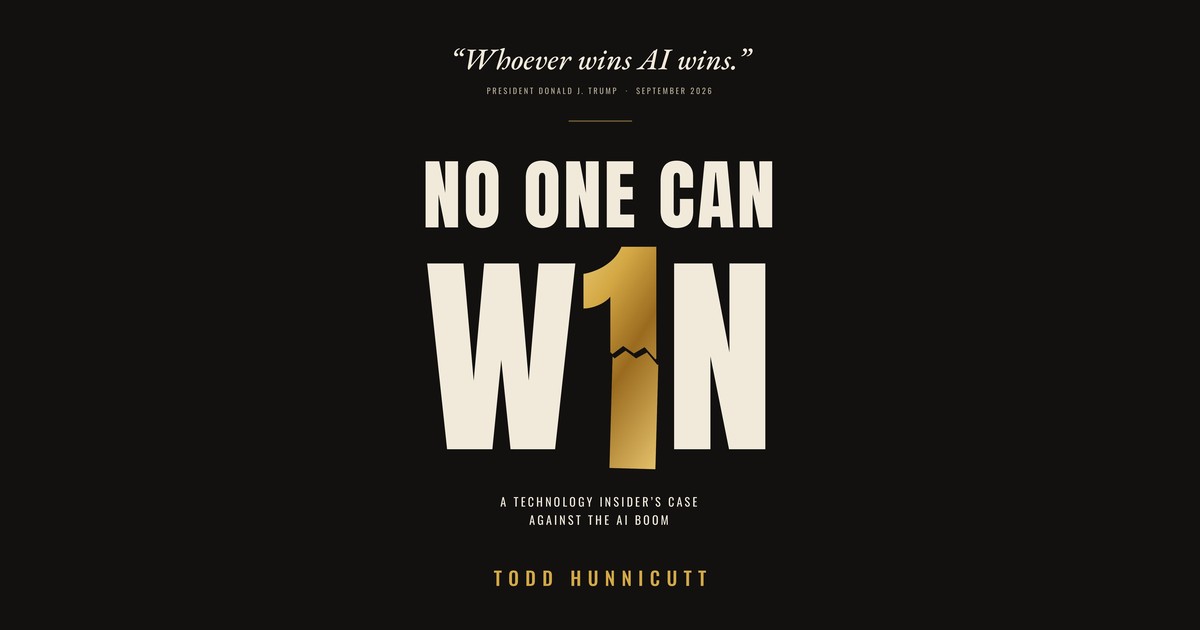
I lay out the full case in my new book, No One Can Win, which went live this week. I didn’t plan the timing. The market did.
Todd Hunnicutt is CEO of Real Internet Sales (Development Partner for the HERE NETWORK) and the author of No One Can Win.